
We may earn a commission when you book through our affiliate links.
Athens works well when the ancient site and the modern city are allowed to be different parts of the trip. Give the first morning to the Acropolis, the afternoon to its museum and the evening to food. Let the second day have the old lanes and, if the weather is kind, a sunset by the sea. A Delphi excursion is an alternative day, not another stop squeezed into this route.
Compare Athens activities
Four activity choices, with the alternatives made clear
- Athens: Acropolis, Parthenon & Acropolis Museum Guided Tour: Shared or private options of roughly two to four hours; skip-the-line site and museum tickets only where the selected option includes them. Not suitable for wheelchair users or people with mobility impairments.
- Athens: the Original Greek Food Guided Walking Tour: Three hours of central tastings; morning departures visit the Varvakios Central Market, afternoon and Sunday tours do not. Drinks are not included in the tasting.
- Athens: Cape Sounion & Poseidon Temple Sunset Half-Day Trip: Five and a half hours with a Halandri metro meeting point, not a central hotel pickup; official archaeological-site admission rules apply. A weather-dependent evening.
- Athens: Mythology of Delphi, Museum and Arachova Guided Tour: A full ten-hour day that replaces the second city day; entrance fees are included only in the ticketed option, otherwise you must buy the 13:00-14:00 slot yourself. Not suitable for wheelchair users.
The two-day shape
Day one: an early Acropolis visit, the Acropolis Museum and an unhurried evening meal. Day two: the lanes of Plaka and Anafiotika, then the choice between a slower city afternoon and a half-day trip to Cape Sounion for sunset. These are different kinds of time. Use the metro between the centre and the coast, and leave a buffer around each major outing for heat, queues and food.
Athens is a city where the official advice and the marketing advice disagree. The city guide’s own dos and don’ts tell you not to attempt the Acropolis at midday in summer and not to try to fit every museum, restaurant and beach into a weekend. That is a better starting point than a checklist that treats one of the world’s oldest cities as a timed obstacle course. Choose the version of Athens you want to spend time with. Two days can offer a clear introduction without pretending to finish a city this old.
Day one: the Acropolis earns the early start
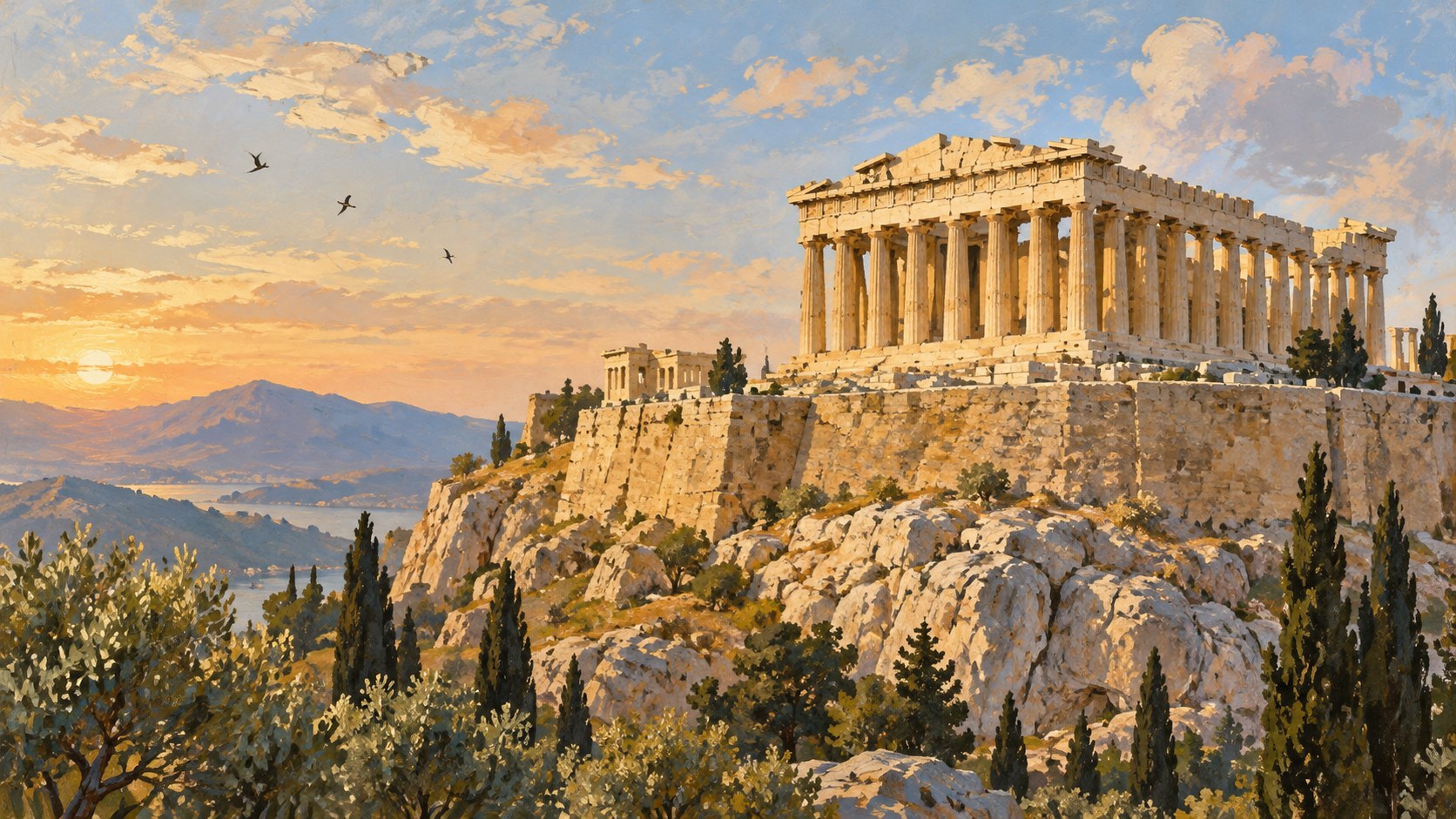
Begin at the Acropolis, early. The city’s official guide describes the Sacred Rock as home to the Parthenon, the Temple of Athena Nike and the Erechtheion with its row of Caryatids, and its practical guidance is simple: go early, wear sunscreen and do not climb at midday in summer heat. The marble underfoot is polished and slippery, so footwear matters more here than in most cities.
Entry is timed, and the guided products below are explicit about the consequences: latecomers are not waited for, and airport-style security can mean waits of thirty minutes or more at peak times. Book or buy your admission in advance and match the time slot to your actual plan. The official ticket portal for Greece’s archaeological sites is the source for current prices and slots; a combined five-day ticket covering the Acropolis and several other ancient sites exists for visitors who want more than one ruin.
If you want a guided morning, the Athens: Acropolis, Parthenon & Acropolis Museum Guided Tour below offers shared and private options of roughly two to four hours. Some options include skip-the-line tickets for the site and the museum; others do not. Read the selected option, not only the activity title. The listing excludes wheelchair users and people with mobility impairments; the site itself has a lift arrangement that requires advance phone contact and does not operate in severe weather, so confirm access needs with the site directly before assuming a product will work.
Let the museum have the afternoon
The Acropolis Museum sits below the rock on Dionysiou Areopagitou, the pedestrian avenue the city guide calls a summer evening ritual. Its top-floor Parthenon Gallery recreates the frieze in its original orientation, and the official site lists ramps, lifts and wheelchairs available at the information desk. It is a calmer, cooler few hours than the hill above it, and it explains what you have just seen.
The combined guided tour pairs the site and the museum in one booking, which suits travellers who want the morning and early afternoon settled in advance. If you prefer to move at your own pace, book the museum separately through its official site and keep the afternoon free. Both versions are reasonable. What does not work is treating the museum as a thirty-minute gap between other appointments.
Choose food that fits the people travelling
Athens eats late, and a food tour can replace the meal part of the day rather than sit on top of it. The Athens: the Original Greek Food Guided Walking Tour runs about three hours through the centre, with tastings that include souvlaki, feta, olives and loukoumades. Its morning departures visit the Varvakios Central Market; afternoon and Sunday tours do not, because the market is closed. If the market is the part you care about, book a morning.
The current listing notes that drinks are not included in the tasting and that the tour is not suitable for wheelchair users. Tell the provider about dietary needs before the day rather than assuming a souvlaki stop can improvise for every requirement. If the format does not fit, choose a seated taverna meal instead. A trip does not become less local because you skipped a product.
Day two: give the old lanes a morning
Plaka and Anafiotika sit on the north-eastern slope below the Acropolis, close enough that the rock stays above you while you walk. Keep the morning slow: the lanes, a coffee, the small churches, and time on Dionysiou Areopagitou or Apostolou Pavlou, the pedestrian routes the city’s accessible-itinerary guide describes in detail, including which stretches are steep, slippery or difficult for wheelchairs. This is the part of the trip that can stay independent. You do not need a guide for every district.
After lunch, decide what kind of afternoon you want. Rain, heat or tiredness are good reasons to keep the day small. A good two-day plan contains something you can drop without making the whole trip feel incomplete.
The Sounion choice: a sunset by the sea
If the sky is clear, the Athens: Cape Sounion & Poseidon Temple Sunset Half-Day Trip turns the second afternoon into a coastal one. The trip runs about five and a half hours and meets outside Halandri metro station on the blue line, roughly twenty minutes from Syntagma. Note the meeting point: it is not a hotel pickup in the centre, and the metro ride is part of the timing, not an afterthought.
Temple admission follows the official archaeological-site rules, and the product notes that during the summer and early autumn months only full-price tickets apply, with no reduced senior admission. A sunset visit is also a weather decision. Check the forecast before committing, and do not treat a timed departure as a promise of a clear horizon.
Delphi replaces a day
If ancient sites matter more to you than the coast, use the Athens: Mythology of Delphi, Museum and Arachova Guided Tour instead of the second day’s city route. It is a ten-hour day by air-conditioned bus to the Temple of Apollo, the Delphi Museum and the mountain village of Arachova, departing from near the Acropolis metro station. Travel time is real; this is a day you swap, not an evening you add.
The ticket detail matters here: entrance fees are included only in the option that says so. If you book the version without tickets, the operator requires you to buy your own for the 13:00-14:00 entry slot so the group can enter together. The tour is not suitable for wheelchair users. Keep Delphi as a genuine choice. Adding it to the Acropolis, the museum, the lanes and Sounion would undo the slower structure of the trip.
Where to stay and how to arrive
For this route, choose accommodation around the journeys you will actually make. A base near a useful metro station, such as Syntagma, Monastiraki or Akropoli, matters more than a view of the rock from your window. Check the exact entrance, station exit, luggage route and evening noise, particularly if you expect to return late from a food outing. Compare rooms and cancellation conditions through Trip.com, then inspect the address rather than relying on a broad Athens label.
From the airport, metro Line 3 runs directly to Syntagma in about forty minutes on STASY’s current timetable, with airport trains every thirty-six minutes and a dedicated airport fare. STASY also posts current service changes on its line pages, so check the timetable for your actual arrival time rather than assuming a late-evening train. The station is not the same thing as arriving at your accommodation; allow for the onward walk or ride with luggage.
Compare flights through Kiwi.com or Trip.com and check the actual airport, baggage and connection terms before booking. Keep arrival day lighter after a late flight. Two days in Athens work best when an ancient morning, a slow afternoon and a sunset choice each have room around them. They do not need to contain every famous ruin, viewpoint and excursion in Attica.
Official planning sources
Use these informational sources for current access and transport details. Activity links above are purchase comparisons; confirm the selected option before booking.