
We may earn a commission when you book through our affiliate links.
Copenhagen rewards a simple split. Give the first day to the compact old centre: a morning walk from the Central Station to the royal square, a lunch that is also a tour, and an hour on the water. Give the second day to one real choice, either the neighbourhoods and the Louisiana coast or a full castle day in North Zealand, and let the evening depend on whether Tivoli is in season. The city is small, flat and built for walking and cycling, so the plan below stays slow on purpose.
Compare Copenhagen activities
Four activity choices, with the alternatives made clear
- Copenhagen: Guided Walking Tour: a private three-hour walk from the Central Station through the medieval centre to Nyhavn and Amalienborg, in English, Italian or Spanish. The listing marks it wheelchair accessible yet also excludes people with mobility impairments, so confirm access needs with the provider before booking.
- Copenhagen: The Original & Oldest Food Tour: four hours and eight tastings from Torvehallerne market, adding up to a full meal with beer or cider included. Not suitable for wheelchair users; dietary needs must be communicated in advance.
- Copenhagen: Canal Cruise with Guide: one hour from Ved Stranden past the Little Mermaid, Amalienborg and Christiansborg. Some departures are live-guided in English and Danish, others audio-guided; not suitable for wheelchair users.
- Copenhagen: Kronborg, Frederiksborg Castle and Roskilde Tour: an eight-and-a-half-hour minibus day that replaces the second city day rather than adding to it. Pickup from most inner-city hotels; luggage cannot be stored on the bus.
The two-day shape
Day one: the old centre on foot, food as the middle of the day, and the harbour from the water. Day two: either keep the city and take Christianshavn, the free town and perhaps the Louisiana coast at your own pace, or swap the whole day for the three-castle tour. These are different kinds of time, and the choice is the point. The metro runs around the clock, and the official city guide recommends bikes and public transport over any car; if you rent a bike, learn the local lane rules and avoid the morning and afternoon rush, when the lanes move fast. Leave a buffer around each major outing for weather, queues and a long lunch.
Day one: the old centre earns the morning
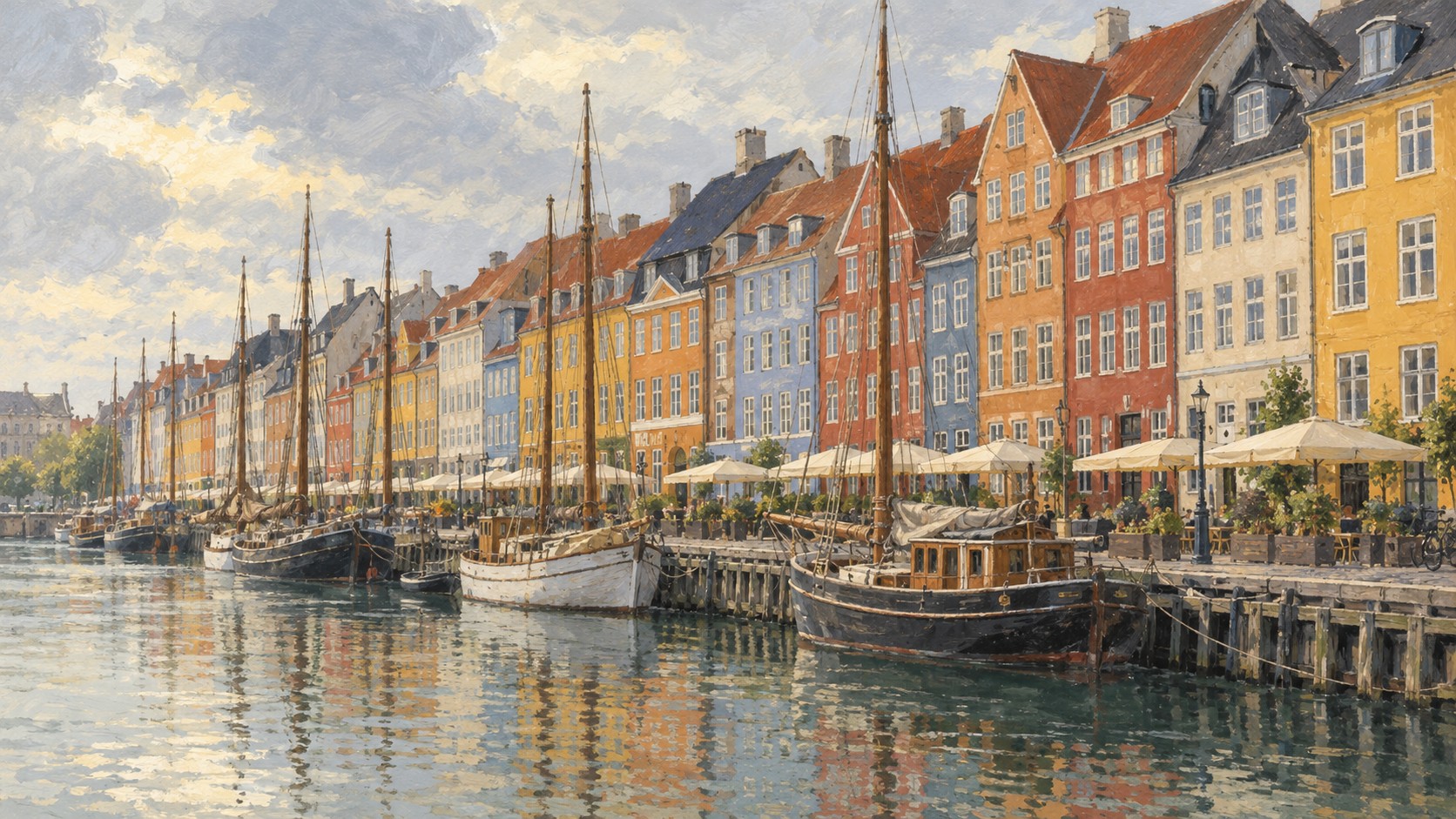
Start where the tours start, at the Central Station beside Tivoli, and walk the spine of the medieval city: the City Hall square, the pedestrian Strøget, the old squares, Christiansborg on its island, the Round Tower, Rosenborg in the King’s Garden, and out to Nyhavn and Amalienborg by the water. It is the obvious first morning because it is genuinely the right one: the distances are short, the landmarks line up, and you learn the city’s layout by walking it.
If you want that walk narrated, the Copenhagen: Guided Walking Tour does it as a private three-hour walk for your own group, meeting at the Central Station by the Tivoli side. It runs rain or shine, and food, drinks and tips are not included, so treat it as the morning’s structure rather than an all-in package. One detail worth noting honestly: the listing both marks the tour wheelchair accessible and lists it as unsuitable for people with mobility impairments. If access matters for your group, write to the provider before booking rather than trusting either line on its own.
Let lunch be the tour
Danish food is easier to understand by tasting than by reading menus. The Copenhagen: The Original & Oldest Food Tour is a locally founded four-hour walk from the Torvehallerne food halls by Nørreport, with eight stops: award-winning cheese, a pastry straight from the oven, smørrebrød in one of the city’s oldest workers’ restaurants, an organic hot dog near the Round Tower, craft beer or cider, liquorice, handmade sweets and a chocolate finish. It adds up to a full meal, so do not book a restaurant lunch on top of it.
The practical notes matter. The tour is not suitable for wheelchair users, dietary restrictions need to be flagged in advance, and children under three join free with a child ticket to age twelve. A vegetarian option exists at the hot-dog stop, but the day leans on Danish classics; if the format does not fit the people travelling, a long seated lunch at Torvehallerne itself is a fair substitute, not a downgrade.
See the city from the water
Copenhagen reads differently from its harbour. The Copenhagen: Canal Cruise with Guide runs one hour from Ved Stranden 26, passing Christiansborg, the Opera House, Amalienborg and the Little Mermaid before returning to Ved Stranden or Nyhavn. Some departures have a live guide in English and Danish, others use an audio guide in six languages, and a poncho appears if it rains. The cruise is not suitable for wheelchair users.
The cheaper alternative is worth naming: the harbour buses are part of the public transport system, so an ordinary ticket buys a similar view without the commentary. Take the cruise if you want the stories; take the harbour bus if you only want the water.
Check the seasons before promising Tivoli
Tivoli is the natural first evening, but the official calendar is a list of seasons, not a year-round promise: Halloween runs from early October to the start of November, Christmas from mid-November to early January, and Easter and summer fill most of the rest, with closed gaps between them. Check the current dates on the official site before building an evening around the gardens, and have the Nyhavn quayside or a Vesterbro wine bar as the unglamorous backup.
Day two: choose your kind of day
The second day is the fork in the trip. Keep it in the city and you can cross the harbour to Christianshavn for its canals, the spiral spire of the Church of Our Saviour and the self-governing Freetown Christiania, then head north if art matters: the Louisiana Museum of Modern Art sits about 25 miles up the coast, is open until 22:00 Tuesday to Friday, and pairs sculpture by the sea with one of Scandinavia’s great modern collections. That version of the day stays independent and needs no product at all.
That version of the day also eats well. Refshaleøen, the former shipyard island across the harbour from Christianshavn, holds the Reffen street-food market and a strip of small breweries and workshops; it is a short harbour-bus ride or a longer, pleasant cycle, and it suits a day with no fixed bookings. Check its season before promising it to anyone, since the outdoor stalls are a warm-weather proposition. If the weather turns, swap the island for the National Museum or the Designmuseum back in the centre and keep the evening for a long dinner.
The castle day replaces the city
If castles outrank neighbourhoods, the Copenhagen: Kronborg, Frederiksborg Castle and Roskilde Tour is the swap: eight and a half hours by minibus to Frederiksborg in Hillerød, Kronborg at Helsingør (Hamlet’s Elsinore) and Roskilde, Denmark’s former capital, with its cathedral and Viking history. Pickup covers most inner-city hotels, with the time and place confirmed by email about a day ahead; be ready outside, because pickups can be delayed by traffic. Luggage and large items cannot be stored on the bus, so schedule it away from arrival and departure days. Treat it as the day, not as something to stack on top of a city morning; adding Louisiana on the same day would undo both.
Where to stay and how to arrive
For this route, base yourself near a metro station rather than near a view: Kongens Nytorv, Nørreport or the Central Station area all put day one’s walk and the airport line within a few minutes. Check the exact entrance, the station exit, the luggage route and evening noise, particularly around the harbour bars in summer. Compare rooms and cancellation conditions through Trip.com, then inspect the address itself rather than relying on a broad Copenhagen label.
From the airport, both the metro and the train leave from Terminal 3 and take about fifteen minutes to the centre, and the metro runs 24 hours. The official city guide suggests a City Pass or Copenhagen Card if you plan to use transport heavily; whichever you buy, check that it covers the zones your plans actually touch, since the airport and the Louisiana coast sit in different ones. Compare flights through Kiwi.com or Trip.com and check the real airport, baggage and connection terms before booking. Keep arrival day light after a late flight. Two days in Copenhagen work best when the harbour morning, the food middle and the second-day choice each have room around them; they do not need every castle, museum and neighbourhood in Zealand.
Official planning sources
Use these informational sources for current access and transport details. Activity links above are purchase comparisons; confirm the selected option before booking.